Trading Strategies and Insights for Successful Day Trading in 2026
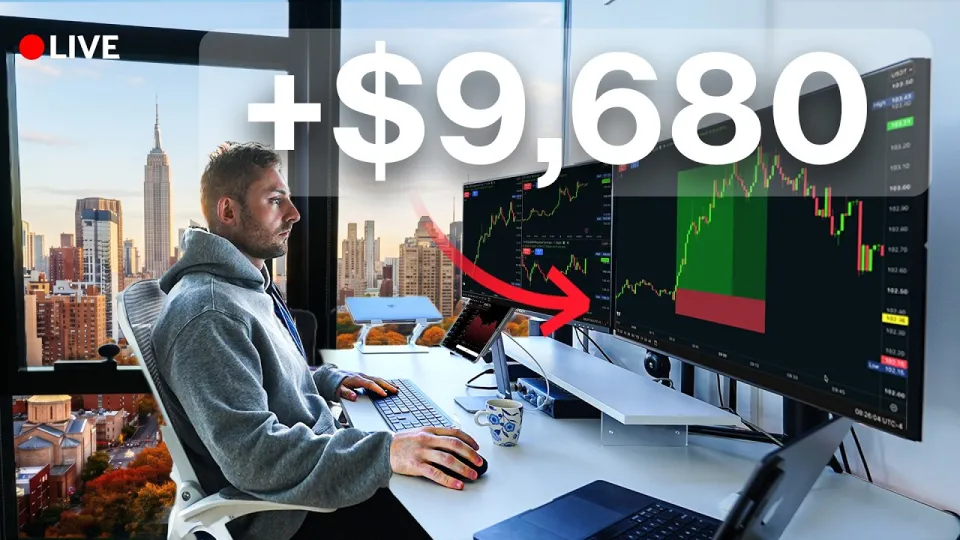
Video: LIVE DAY TRADING - How I Make $9,680 Risking $2k (My 10x Strategy)
Need articles like this for your video? They help promote it on YouTube and Google — order them in the Telegram bot @sat_sit_bot. It writes articles around your video, embeds the video and publishes them on popular niche websites (no ads). Free trial — 50 articles.
Key takeaways
- Day trading can generate significant profits with disciplined risk management.
- Craig Percoco’s strategy shows making $9,680 risking $2,000 using a 10x leverage approach.
- Consistent trading methods and emotional control are key to long-term success.
- Using reliable indicators and trade tools improves decision-making in live markets.
- Educational mentorship and community support accelerate trader development.
Trading is a dynamic market activity where traders buy and sell assets within the same day aiming to profit from short-term price fluctuations. In 2026, day trading remains a popular method to generate income, but success depends heavily on solid strategies, disciplined risk management, and psychological control. One proven approach is demonstrated by Craig Percoco, who shares how he made $9,680 by risking $2,000 using his 10x strategy, combining leverage and strict trade management. For traders seeking to learn or improve, understanding these core elements is essential.
Understanding Day Trading and Its Profit Potential
Day trading involves opening and closing positions within a single trading day to capitalize on intraday price movements. This style demands quick decision-making and real-time analysis of markets such as crypto, forex, and futures. The profit potential can be substantial, as shown by Percoco’s example where leveraging $2,000 risk capital by ten times resulted in nearly $10,000 profit. However, this high reward comes with equally high risk, requiring traders to carefully manage their exposure and avoid overtrading.
Craig Percoco’s 10x Strategy Explained
Craig Percoco’s 10x strategy revolves around using leverage to multiply gains while employing strict risk controls. Key features include:
- Capital Allocation: Only a small portion of the total account, here $2,000, is risked per trade.
- Leverage Use: Positions are amplified by 10 times, increasing profit and loss impact.
- Trade Selection: Trades are chosen based on technical indicators and market sentiment.
- Risk Management: Stop losses are set to limit downside, and position sizes are controlled.
- Psychological Discipline: Maintaining calm and avoiding emotional reactions prevents impulsive decisions.
This strategy is not for everyone due to leverage risks but can be effective when executed with discipline and proper tools.
Essential Tools and Indicators for Effective Day Trading
Successful day trading requires reliable indicators and trade tools to identify entry and exit points. Percoco offers access to his indicators and tools designed to:
- Track trends and momentum in real-time.
- Signal potential reversals and breakout points.
- Help set stop loss and take profit levels.
- Provide alerts and confirmations to reduce guesswork.
Utilizing these resources, traders can improve their timing and reduce the chance of costly errors. Integrating such tools with personal analysis enhances decision confidence.
Managing Emotions and Staying Disciplined in Trading
One of the most significant challenges in trading is emotional control. The market’s volatility can trigger fear, greed, and impatience, leading to poor choices like chasing losses or overtrading. Successful traders develop:
- A mindset focused on process over immediate results.
- Patience to wait for optimal trade setups.
- Acceptance of losses as part of the business.
- Consistency in following the trading plan.
This mental discipline, combined with a clear strategy, is vital for sustainable profits and avoiding burnout.
Common Questions from Traders and How to Address Them
Many traders ask about how to start, how to avoid losses, or how to scale profits quickly. Insights from the trading community highlight that:
- Long-term success depends on learning and evolving strategies.
- Managing risk and sticking to one solid edge is more important than chasing multiple signals.
- Financial education and mentorship accelerate growth.
- Diversification and understanding different asset classes help balance risks.
Traders are encouraged to seek guidance, avoid get-rich-quick schemes, and build skills gradually.
Useful Links
- Get My Indicators & Trade Tools — bonus tools for traders
- Mentorship/Private Team — professional guidance
- Craig Percoco Instagram — social insights
- Join Discord Community — connect with other traders
- Trade on Blofin — exchange platform
Conclusion
Day trading in 2026 offers opportunities for substantial profits but requires a disciplined approach combining well-tested strategies, risk management, and emotional control. Craig Percoco’s 10x strategy exemplifies how leveraging capital with strict controls can generate significant returns, as evidenced by his $9,680 profit on a $2,000 risk. Traders should use reliable indicators, seek education, and maintain patience to succeed. For those interested in developing their skills, accessing Percoco’s indicators and mentorship programs is a valuable step towards consistent profitability.
Source: LIVE DAY TRADING - How I Make $9,680 Risking $2k (My 10x Strategy) · Markdown version
Questions & answers
What is the key to making consistent profits in day trading?
Consistent profits come from disciplined risk management, sticking to a proven strategy, and maintaining emotional control to avoid impulsive decisions.
How does leverage affect day trading risk and reward?
Leverage amplifies both potential profits and losses. While it can increase returns, it also increases risk, so it must be used cautiously with proper risk controls.
Are there specific tools or indicators recommended for day trading?
Yes, using reliable technical indicators and trade tools helps identify entry and exit points, manage risk, and improve decision-making in fast-moving markets.
Can beginners succeed by copying advanced traders’ strategies?
Beginners can learn from experienced traders but should focus on understanding the strategy, managing risk, and gradually building skills rather than blindly copying trades.